

Building Codes vs. Quality Standards: What Makes a Great Custom Home?
Ready to work with a builder committed to quality?
Many people still remember an old TV commercial for a brand of kosher hot dogs. In it, Uncle Sam is visibly let down to learn that federal rules allow hot dog makers to use artificial coloring and non-meat fillers. The tagline was a classic: "We don't. We're Kosher, and we have to answer to an even higher authority.”
The ad was clever, but it stuck with people because it was true. A government rule tells a company the least it has to do. It says nothing about the best it could do. The same is true of building codes.
What Do Building Codes Do for Your Home?
Codes matter, and we want to be clear about that. Structural requirements make sure your stairs are safe to walk on and that your house can handle whatever loads gravity and weather put on it. Fire codes help keep a home from going up in flames. Electrical codes protect your family from shock and fire, and plumbing and sanitation codes are the reason clean water comes out of your tap. Every one of those rules exists to protect your health and safety, and every homeowner benefits from them. We appreciate them, and you should too.
If a Home Meets Code, Is It Built Well?
Not necessarily. Codes set a minimum for safety, but they don't measure craftsmanship. Builders have an old saying that a house built only to code is the worst house you're legally allowed to build. That may be a little harsh, but the point holds. Passing code means a home cleared the minimum. It doesn't mean the home was built with care, and the builders worth hiring set their own bar well above that line.
What Does Going Beyond Code Look Like in Practice?
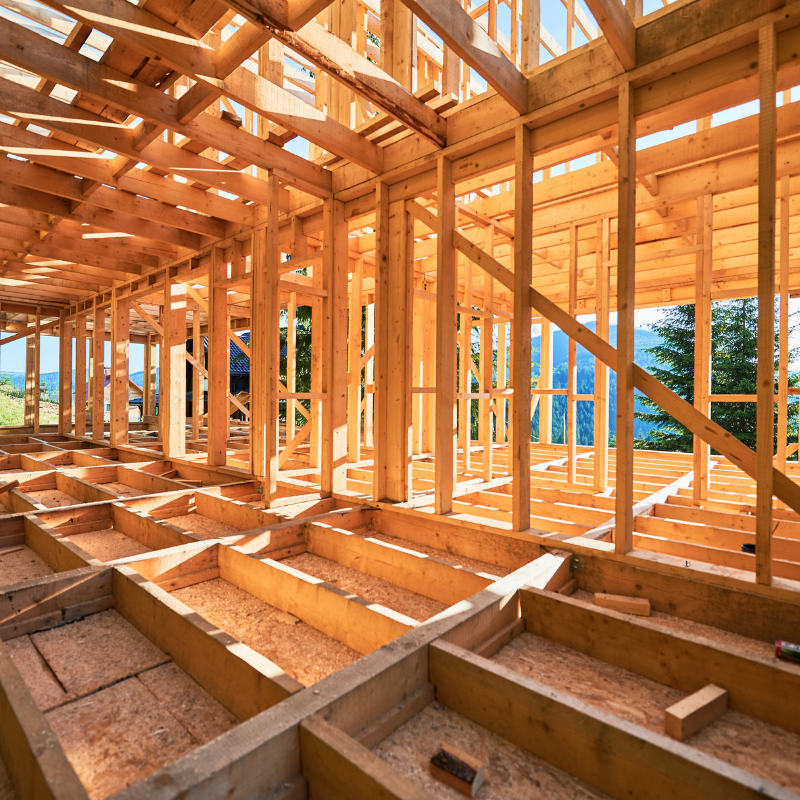
Floor framing is a good example. Code sets the maximum distance floor joists can span before they need support from a beam below. A floor framed right at that limit will carry the weight of your furniture, family, and guests without any trouble. It may also flex enough that the dishes rattle in the china cabinet when the kids run through the dining room. A builder who cares how a home feels to live in will use deeper joists or shorter spans so the floor stays solid and quiet underfoot. Nothing about that is required. It's simply the better way to build.
Is the Lowest Bid Really the Best Deal?
The gap between code and quality explains a lot about competitive bidding. When a job goes to whoever comes in cheapest, that builder has little reason to do anything beyond the code minimum, since every extra step costs money that might not have been included in the bid. A great house needs both pieces: the code requirements that keep it safe and the standards of excellence that make it a pleasure to live in.
What Quality Standards Do Professional Builders Follow?
Quality-focused builders follow best practice standards, and those standards cover nearly every phase of the work in measurable terms. There are tolerances for how level the floor framing needs to be. There are limits on how much moisture interior trim and wood flooring can hold, since drier wood shrinks less once it's installed. There are even different levels of drywall finish, with the right one depending on the wall's location and the paint color planned for it.
Who Makes Sure Those Standards Are Met?
An established builder relies on a steady team of in-house staff and trade partners who know the standards for their part of the job and meet them consistently. The best crews are a little obsessive about it. They care about straight walls, square corners, flawless finishes, doors that open and close the way they should, and windows that stay watertight for years. Code inspections also vary from one area to the next. Where inspectors are less particular, a professional team still builds well past what the code calls for, because its standards don't depend on who is checking.
What Should You Look for in a Custom Home Builder?
Look for a builder whose goal is a home that keeps you safe, makes you happy, and doesn't hand you unpleasant surprises down the road. Codes are part of that, but they're only the starting point. The builders who deliver the best homes answer to something higher than an inspector's checklist: their own commitment to doing the work right.
At HomeSource Builders, that's the standard we've held ourselves to through more than 25 years of building custom homes in Asheville and Western North Carolina. If you're starting to plan your custom home, we'd love to talk with you about what that looks like for your project.